A method of creating art that allows artists to make many copies of a design or image is known as printmaking. Rubbing is a kind of printmaking in which paper is placed over a textured surface, and then it's rubbed with something that will leave marks. Materials that can be used include rolled ink, chalk, charcoal, pencil, wax, and crayon.
Rubbings date to ancient times, and this type of print has been found in civilizations all over the world. Almost any raised surface can be used to make a rubbing. For example, in Japan, artists make fish rubbings or prints of the scaly bodies of fish, and people in India make imprints of the writing on tombstones, and the designs on temple walls.
You've probably made a rubbing yourself. If you place a penny under a sheet of paper and rub it with a pencil, the image of Abraham Lincoln will appear. In this activity, we'll use scrap newsprint to make leaf rubbings. Newsprint is the thin paper on which newspapers are printed, and you can usually get an end roll from your local paper just by asking for it.
Such leftover materials from business and industry are known as preconsumer waste. By using surplus materials to make art, you'll save money, and you'll help conserve the energy and natural resources needed to make new art supplies. It also will help save valuable landfill space. In this project, we'll make rubbings of leaves using crayon. First, let's learn something about trees and their leaves.
Identifying Types of Trees
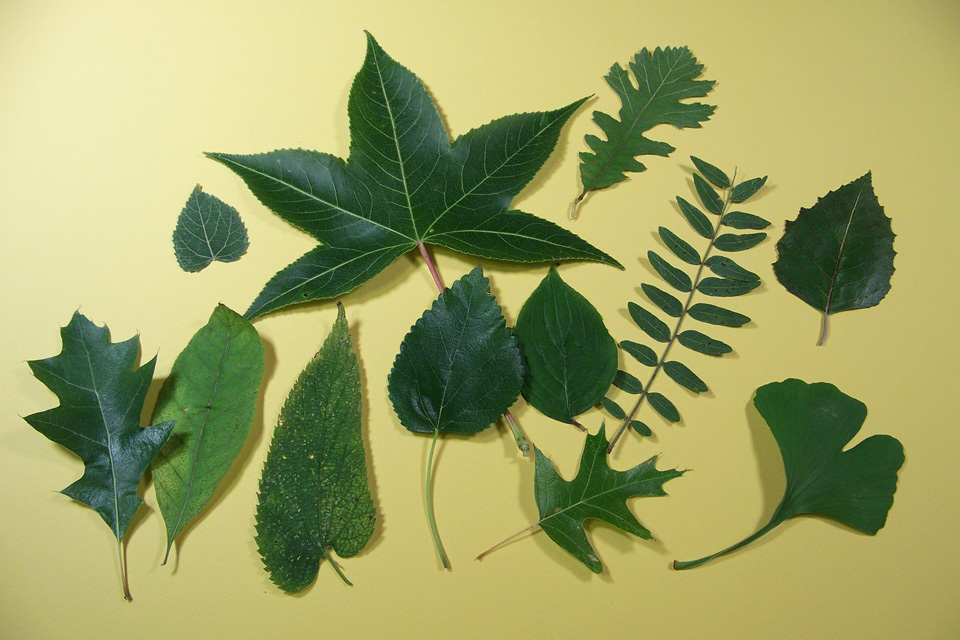 Some common deciduous trees found in the United
States include birch, chestnut, willow, maple, locust, oak, sycamore, tulip
poplar, sassafras, ginko, and walnut. One way we can identify a specific tree
by name is to look at the shape of its leaf. In this project, we'll use a leaf
to make rubbings or prints.
Some common deciduous trees found in the United
States include birch, chestnut, willow, maple, locust, oak, sycamore, tulip
poplar, sassafras, ginko, and walnut. One way we can identify a specific tree
by name is to look at the shape of its leaf. In this project, we'll use a leaf
to make rubbings or prints.
See What Tree Is That? at the Arbor Day Foundation Tree Identification site . Click on “View the list of included trees” to learn how to identify trees in your part of the United States. Visit the main site to find sections designed just for kids, and see the link below to play an online game that tests your knowledge of trees.
You will need:
- Newsprint
- Leaves
- Crayons
How to:
The first thing you'll need to do is find some leaves. While the prettiest are those that have turned to their fall colors, the best kind to use for rubbing are fresh, green leaves. You can probably find lots of different ones just by walking outside and looking around in the yard. If you live in an area that has no trees, go to a park to find leaves.
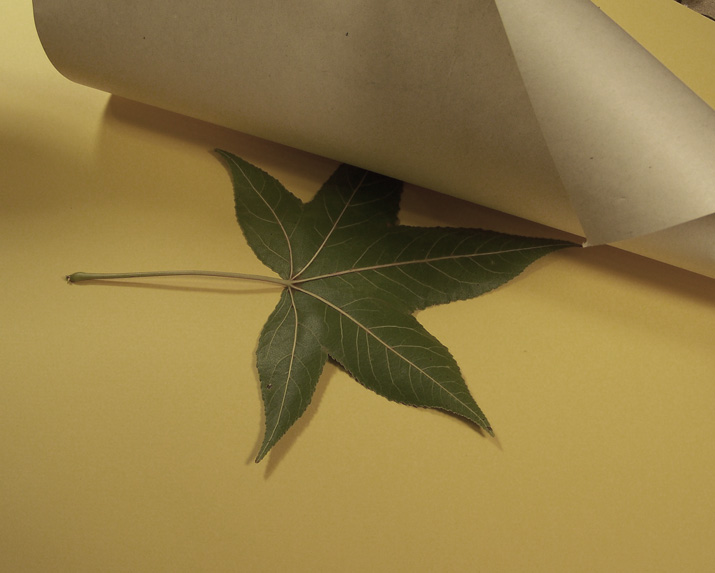
After you've gathered a variety of leaves, you're ready to make a print. Lay a leaf on a smooth work surface with the vein-side up. We'll use this side because it's more raised, and it will result in a better impression.
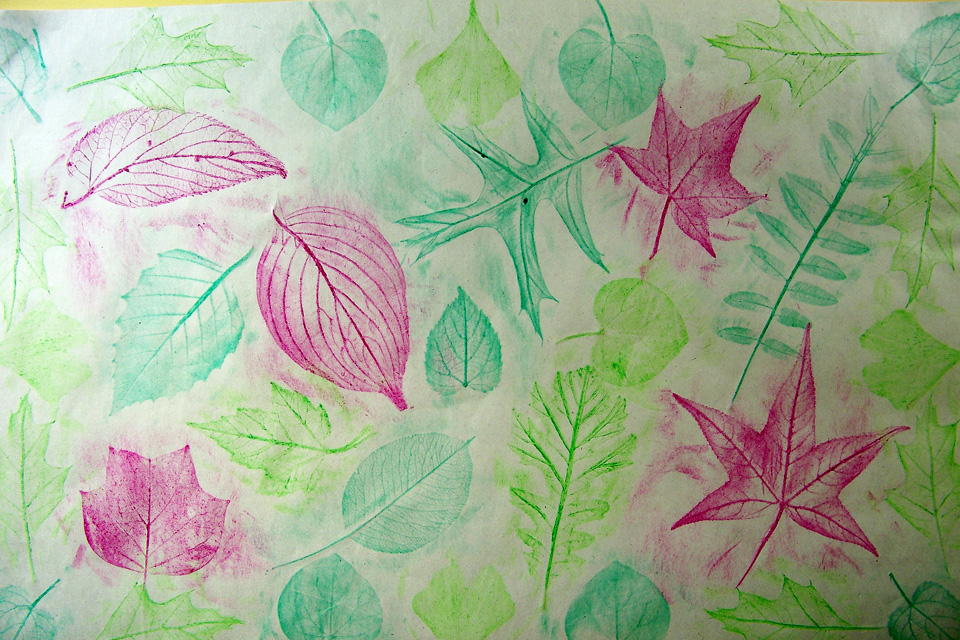
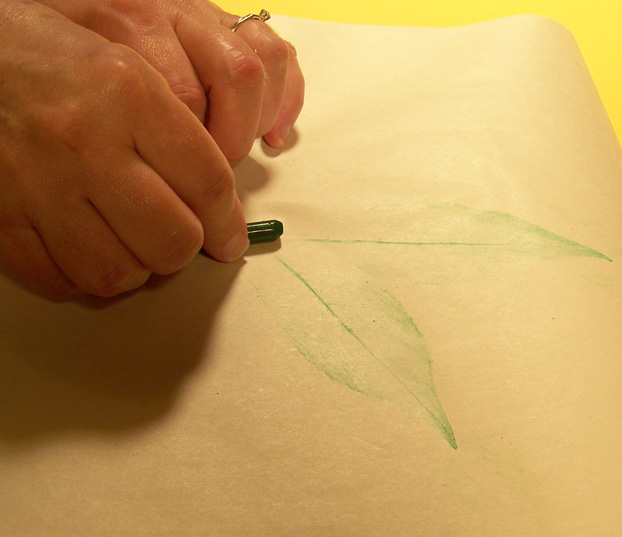
Place a thin piece of paper, such as newsprint, on top of the leaf. Remove the paper from a dark colored crayon, and while holding the leaf in place with one hand, lay the crayon flat to make the rubbing, as shown. Be sure to make an impression of the veins as well as the outside shape of the leaf.
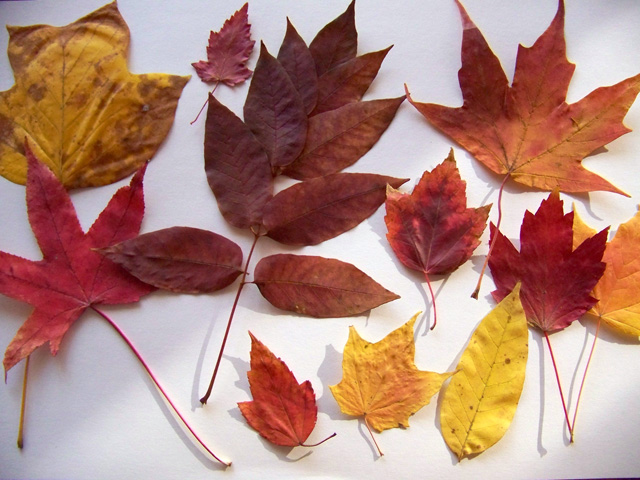
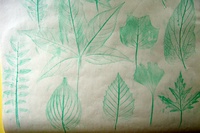
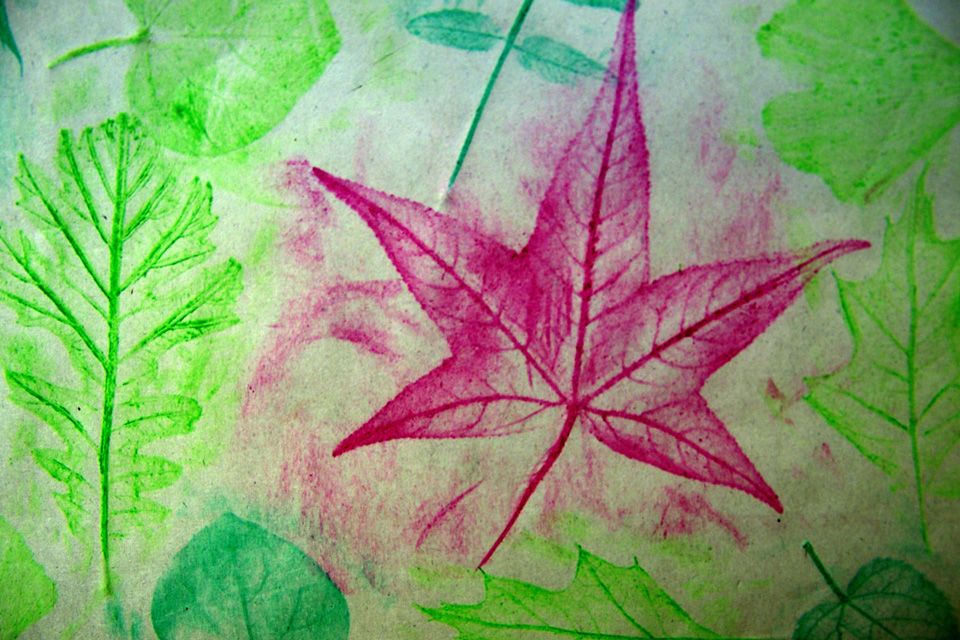
Make prints of a variety of leaves on one page. You may use the natural fall color of the leaves, or just enjoy the shapes that result, rubbing different colors on the page to make a design. If you're trying to learn how to identify leaves, under each image, print the name of the tree from which the leaf came.Tips and Tricks:
 If you can't find newsprint on which to make
the art, just use the clean back of a used sheet of copy paper.
If you can't find newsprint on which to make
the art, just use the clean back of a used sheet of copy paper.
Break the crayon in half, or use smaller pieces. Since it's easier to make the rubbing with shorter crayons, this is a great way to use scraps.
Do leaf rubbings in your classroom, and then
exchange the artwork with kids in other parts of your country to see the types
of leaves that grow there. Be sure to print the name of each leaf under its
image. 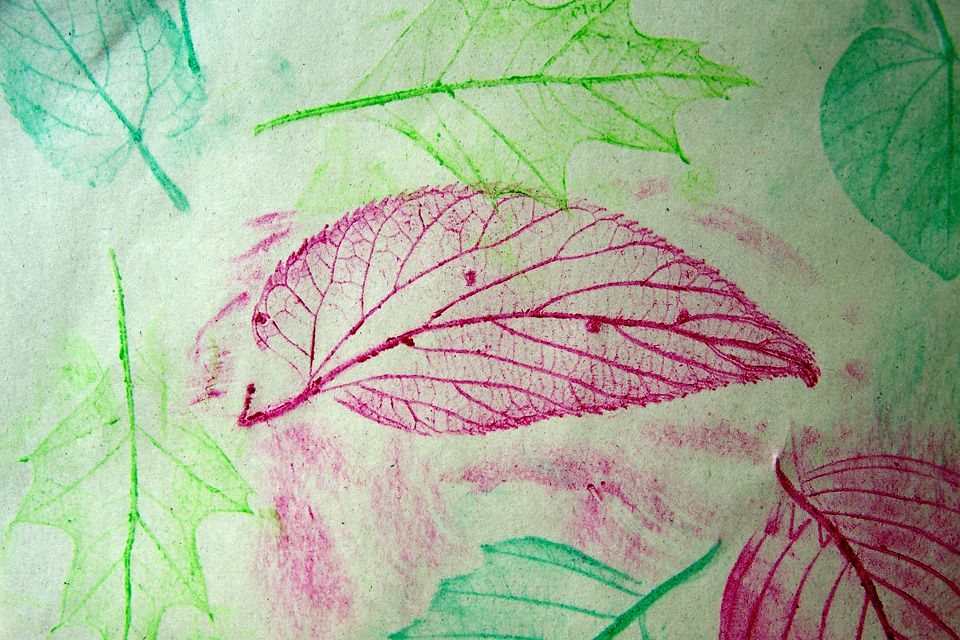
Visit What Tree Is That? at the Arbor Day Foundation to learn how to identify types of trees just by looking at their leaves.
Brown County, Indiana is one of the state's most popular travel destinations, especially in the fall when the leaves change color. Visit the Brown County Convention & Visitors Bureau to learn more.
© 2008 Marilyn J. Brackney (updated 2025)
Volume 21 No. 4
Return to Main Web Page
Previous
Activities
Select this to choose other activities.
